American Holistic Health Association
The free, impartial wellness resource connecting you to the power of choice

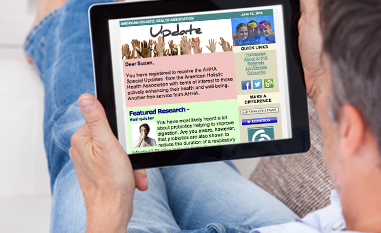
AHHA Issue 2-12-21

FEATURED ISSUE
Children and antibiotics
As a parent, it can be frightening when your child is dealing with an infection. You may want to become knowledgeable about the pros and cons of including antibiotics in a treatment program before being faced with making a decision regarding your own child. Recent research has widened the range of recommendations related to the use of antibiotics when treating young children. These studies are going beyond avoiding overuse of antibiotics to explaining why they recommend that you not use antibiotics at all with young children.
Issue: Antibiotics safe for young children?
AHHA strives to maintain a neutral position on issues and views knowledge as power. For those interested in this month’s issue the articles cited below were selected to offer you some resources to begin your research to better understand the two very divergent views of whether or not antibiotics can be harmful to young children.
Pro – for using antibiotics
Information About Antibiotic Use in Children (11/16/20)
Drugs.com
Antibiotics are used to fight infections that are caused by bacteria. Your child’s healthcare provider will decide if your child’s illness is caused by bacteria. This decision is based on an exam, your child’s symptoms, or tests that check for bacteria.
Pediatric Treatment Recommendations (2/1/17)
CDC Centers for Disease Control and Prevention
A table that summarizes the most recent principles of appropriate antibiotic prescribing for children obtaining care in an outpatient setting.
Antibiotic Use in Children: Understanding Safe and Effective Antibiotic Care (11/5/20)
University of Pittsburgh Medical Center Health Beat
Antibiotics are effective in fighting bacterial infections, but their overuse has created a problem called antibiotic resistance.
Are Antibiotics Safe for Babies and Toddlers? (7/14/20)
by Colleen de Bellefonds
What To Expect
How to safely use — and avoid the overuse — of antibiotics.
Con – against using antibiotics
Association of Infant Antibiotic Exposure With Childhood Health Outcomes (11/15/20)
Zaira Aversa, MD, PhD, Elizabeth J. Atkinson, MS, Marissa J. Schafer, PhD, Regan N. Theiler, MD, PhD, Walter A. Rocca, MD, Martin J. Blaser, MD, Nathan K. LeBrasseur, PhD
Mayo Clinic Proceedings
To investigate the extent to which antibiotic exposure in the first 2 years of life is associated with the risk of immunological, metabolic, and neurobehavioral health conditions with childhood onset. The present study finds significant associations between early life antibiotic exposure and several distinct health conditions with childhood onset.
Danger of Antibiotics for Children (2019)
Sanuku
It generally takes the first three to five years of life for a child’s gut microbiome to develop fully as a community. In early life, the gut flora plays a critical role in kick-starting a child’s immune system and in programming their metabolism. The use of antibiotics in early childhood impairs this important development. Worse yet, a study published in Nature Communications showed that a child’s gut flora may take at least a year or sometimes up to two years to fully recover from the damage caused by some antibiotics, especially those that are used to treat upper respiratory tract infections.
Parents Unintentionally Harming Children with Nonprescription Antibiotics (1/28/21)
by Joe Thompson
Parentology
“Antibiotics can, unfortunately, kill off a lot of the helpful bacteria that are normally in a child’s body — such as those in the gut — and essential to normal health.” With continued use, the bacteria in a child’s gut could become resistant to that antibiotic. This resistance may then make the child susceptible to future infections, which poses a risk to not just that specific child but other members of the family.
Antibiotics might kill gut bacteria that protect newborn lungs (2/8/17)
NewScientist
Exposure to antibiotics in the womb could permanently weaken the immune system and make lung disease more likely.
We encourage you to go to our blog at https://ahha.org/blog and post your comments. You are invited to share additional resources you have found relating to this issue.
To review past ISSUES, visit the Special Updates Archives.
Discover All of The Resources In This Website











American Holistic Health Association • PO Box 17400 • Anaheim, CA 92817 • USA • 714.779.6152 • mail@ahha.org